Make room for everyday collections.
Creative Collection / a kitchen display from the SS26 image bank.
Give useful objects a place that works as well as it looks.
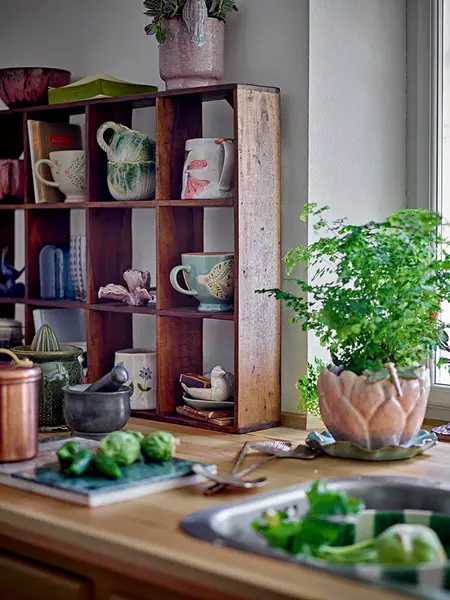
A collection can begin with the objects that are already used every day. In Creative Collection’s official SS26 photograph, cups and jugs sit in a compartmented display beside a plant and a kitchen worktop. The image offers a practical idea for a personal kitchen or pantry: make the things you enjoy accessible, while giving them enough order to belong together.
Independent design commentary. Original photography supplied by the credited source.
There is more to explore.
Read the full story, including our ideas for your home, material considerations and source notes.
Subscribe to read all ↗Free to join. Receive design notes by email and unsubscribe at any time. Privacy ↗
Full story
The observation
Creative Collection is one of the brands represented by Bloomingville. Its own brand perspective emphasises character and individual expression in the home. The photograph here comes from the SS26 media bank; it should not be presented as an image of the separate AW26 range. It also does not establish the exact species or composition of the materials in the room.
For a Jakarta home
For a Jakarta apartment or a larger home with a hosting kitchen, start with what the display needs to hold. Separate objects that are reached for daily from pieces used only occasionally. A compact, considered open area can sit alongside closed storage for the less decorative necessities. For newlyweds combining collections, this is also a useful conversation about the objects each person wants to keep and use.
Arrange for use, then edit for balance
Measure the objects before deciding on compartments or shelf heights. Mugs need room for their handles and space to be lifted comfortably; taller serving pieces may need a different position. Place frequently used objects where they can be reached without moving several others first.
Look for a small number of visual connections, such as a recurring colour or related shapes. Let some areas remain quiet. A display will feel more personal when it accommodates objects with different histories, rather than requiring a completely new matching set.
Finally, check the worktop. An arrangement that looks attractive in a photograph still needs room for preparing a drink, putting down groceries or serving guests. Keep practical surfaces clear and make the display easy to reset after use. That everyday ease is part of the design.
Before you specify
Review load, fixing, cleaning access and exposure to water, heat and direct sun with the design team. A photograph cannot confirm a shelf’s capacity or an object’s suitability for food use. Verify those details from the relevant specifications. Keep the image’s brand credit attached and avoid turning an editorial reference into a claim that the studio designed or supplied the pictured setting.
Sources & context
- Bloomingville · Original Creative Collection SS26 media-bank photograph ↗ (source, opens in a new tab)Checked 2026-11-10
- Creative Collection · Official brand perspective ↗ (source, opens in a new tab)Checked 2026-11-10
- Bloomingville · Editorial image permission and brand credit ↗ (source, opens in a new tab)Checked 2026-11-10
The conversation