A landscape of low tables.
BOLIA Podi / Studio Nooi’s approach to material and arrangement.
Let material, scale and movement shape the centre of the seating group.
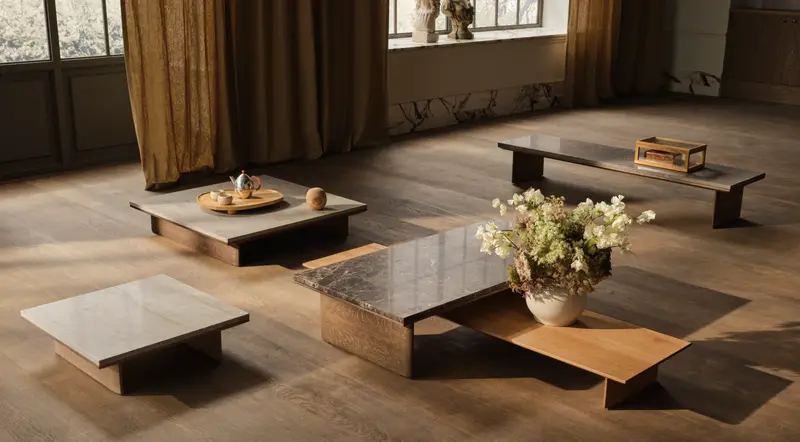
The centre of a living room does not have to be a single, oversized statement. BOLIA’s official Podi photograph shows a group of low tables, with different finishes bringing variation to a quiet setting. The useful idea is how several surfaces can work together: a place for a tray, another for flowers, and clear space for the people moving between them.
Independent design commentary. Original photography supplied by the credited source.
There is more to explore.
Read the full story, including our ideas for your home, material considerations and source notes.
Subscribe to read all ↗Free to join. Receive design notes by email and unsubscribe at any time. Privacy ↗
Full story
The observation
BOLIA credits the Podi coffee tables to Studio Nooi. Its current collection describes a design that can stand alone or be arranged in groups, with tabletop options including oak, marble and travertine. Those are options across the range; the image alone is not enough to identify every photographed finish. The original photograph is credited to Pia Ulin.
For a Jakarta home
For a Jakarta home or apartment, begin with the seating positions and the routes through the room. Mark a proposed table grouping on the floor before deciding on size or number. A business owner who hosts regularly may need several useful landing places; a couple furnishing a first shared living room may prefer fewer pieces and room to adjust them later.
Compose around the way you sit
Place the most frequently used surface within comfortable reach of the main seats, then test getting up, passing through and carrying a tray. Leave enough usable tabletop for daily life. A beautiful arrangement can become frustrating if books, flowers and objects occupy every available space.
Use contrast with a purpose. A darker surface may give a pale seating group more definition; a quieter finish can allow a patterned rug or artwork to lead. Try the actual materials together under the room’s lighting. Keep the distinction between an overall palette and the specifications of an individual piece clear.
Finally, review the group from the entrance as well as from the sofa. Low furniture contributes to the view across the room. Its outline should help the space feel composed, with enough breathing room for people and the objects they bring to it.
Before you specify
Review the chosen finish using physical samples, current product information and the supplier’s care guidance. Ask about sealing, cleaning, weight, delivery access and installation where relevant. Do not assume every stone option behaves in the same way or that a photographed arrangement will suit the dimensions of another home.
The conversation